
The brain is not designed simply to find the truth. It is also designed to protect the stories, assumptions, and beliefs that help us make sense of the world.
Truth and the Brain explores why we believe what we believe, why changing our minds can be so difficult, and what it takes to examine our own certainty more honestly.
Truth and the Brain
Why our minds believe what they believe
The Central Idea
What if the greatest obstacle to clear thinking is not a lack of intelligence or information?
We tend to imagine that beliefs are the result of facts, careful reasoning, and objective judgment. In reality, what we accept as true is also shaped by memory, emotion, identity, experience, and the people and environments around us.
That does not mean facts do not matter. It means that facts reach a brain that is already interpreting, organizing, and filtering them.
Truth and the Brain is a podcast about belief, evidence, certainty, and the uncomfortable work of changing our minds. Through conversations with experts, real-world examples, and candid discussions between the hosts, each episode explores one of the forces that shapes how we understand the world.
Why This Matters Now
We have more information than ever. That does not necessarily make us better informed.
We live in a world of algorithmically selected information, AI-generated content, persuasive personal stories, and increasingly fragmented versions of reality. It has never been easier to find evidence that appears to support what we already believe.
But questioning other people’s assumptions is the easy part. The harder and more useful work is learning to notice the assumptions operating inside our own thinking.
This podcast does not tell listeners what to think. It offers ideas, evidence, and practical questions to help all of us think more carefully about how our beliefs are formed, protected, challenged, and sometimes changed.
Season 1
Eight episodes. One argument.
Season 1 explores the brain’s preference for coherence, certainty, and belief preservation. Each episode stands alone, while also building toward a larger question: What does it really take to recognize that we may be wrong?
Episode 1
Why We Believe What We Believe
What is happening in the brain when we form a belief? Patrick and Sabine explore the differences among belief, knowledge, and opinion, and examine why the brain often values coherence over accuracy.
The opening episode invites listeners to identify something they hold as certain and ask a deceptively simple question: Why do I believe this?
Episode 2
The Anecdote Trap
Why can one compelling story feel more convincing than a large body of evidence? This episode examines the brain’s preference for narrative and the way dramatic individual cases can overshadow systematic findings.
Listeners will learn how to distinguish between an anecdote that points toward something worth investigating and one that distracts from what the broader evidence shows.
COMING SOON
Episode 3
Correlation Is Not Causation
We often confuse things that occur together with things that cause one another. This episode goes beyond the familiar warning to examine why we tend to make that mistake in ways that support what we already want to believe.
The conversation introduces practical questions that listeners can use when evaluating causal claims in science, business, media, and everyday life.
COMING SOON
Episode 4
Why We Can’t Handle Feedback
We may say that we welcome criticism, but our brains and bodies do not always respond accordingly. This episode examines why being challenged can feel threatening and why defensiveness often appears before reflection has a chance to begin.
It also explores the connection between overconfidence and resistance to feedback, two behaviors that may arise from the same need to protect a stable view of ourselves.
COMING SOON
Episode 5
The Curiosity Myth
Most of us believe that we are curious and open to other perspectives. The evidence suggests that what we call curiosity can sometimes be a search for information that confirms what we already think.
This episode examines the difference between genuine curiosity and confirmation-seeking, and why that difference matters for leadership, listening, and decision-making.
COMING SOON
Episode 6
Living in a Filter Bubble
Algorithms do more than influence what appears on our screens. They increasingly shape the choices, environments, and cultural experiences available to us before we are even aware that a selection has been made.
This episode explores how invisible information filtering affects independent judgment and reinforces many of the other cognitive tendencies examined throughout the season.
COMING SOON
Episode 7
The Cost of Being Right
The need to be right can carry a real cost. It can damage relationships, distort hiring and investment decisions, and encourage organizations to continue pursuing strategies that the evidence no longer supports.
This episode brings confirmation bias into the workplace and examines what happens when accurate information is available but is not genuinely welcome.
COMING SOON
Episode 8
When Beliefs Collapse
What happens when a belief we have built part of our identity around turns out to be wrong? The final episode examines why major changes in belief can feel like loss and why evidence alone is not always enough to produce genuine belief revision.
The conversation asks what allows some people to reconsider deeply held convictions while others become even more committed to them.
COMING SOON
Meet the Hosts
Two perspectives. One shared question.
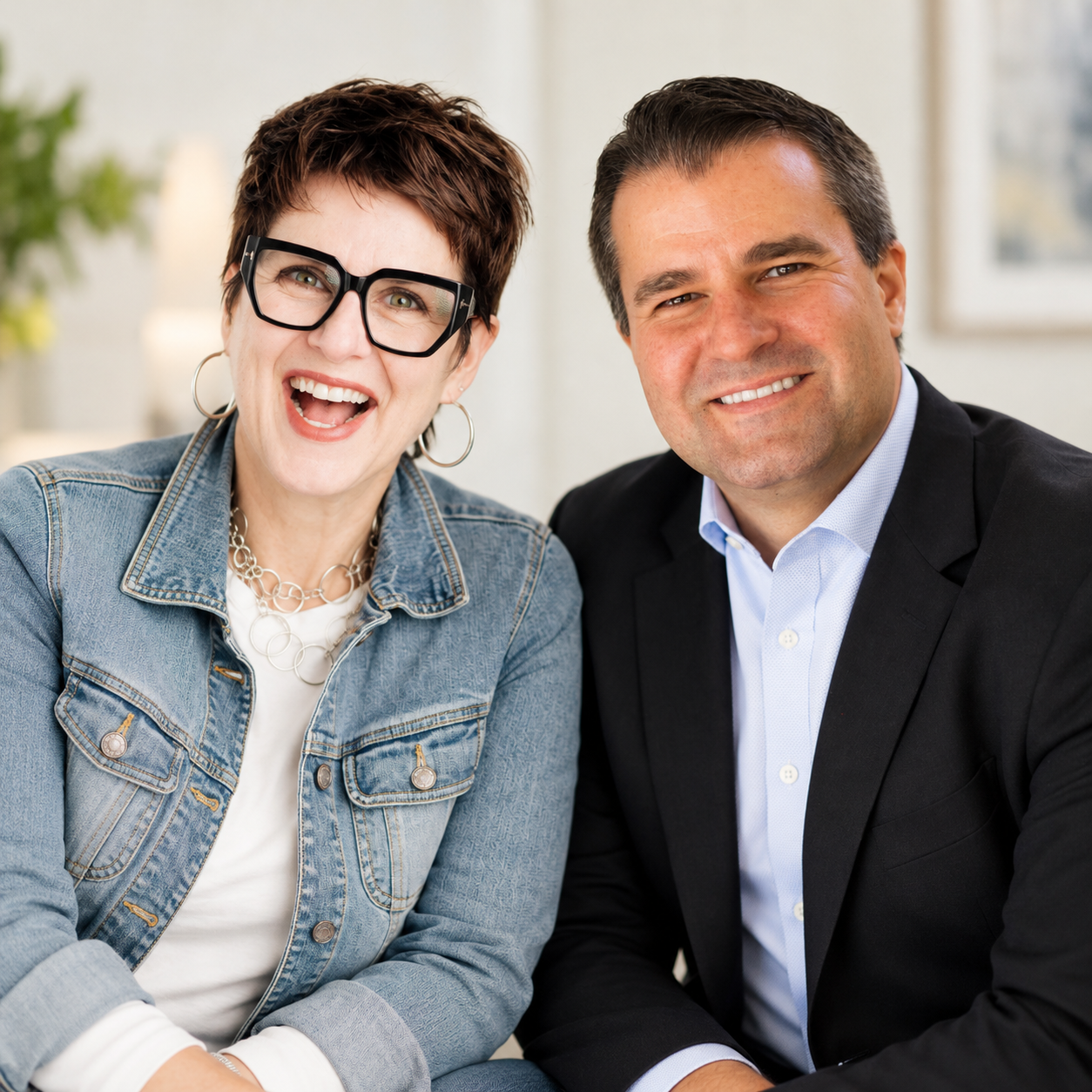
Patrick Bartosch and Sabine Hutchison approach the subject of belief from different but complementary directions. Patrick brings experience in healthcare communications, strategy, and decision-making, while Sabine brings an organizational, entrepreneurial, and human behavior perspective.
Together, they examine not only why other people believe questionable things, but why all of us can become attached to explanations that feel coherent, familiar, or personally important.
More About Patrick and SabinePatrick Bartosch
Patrick is a strategic communications professional and Founder & President of Waypoints Communications. Before starting his consultancy, he worked for academic organizations such as Stanford University and the University of Miami. He has a Ph.D. in health sciences from the University of Otago in New Zealand, an MBA from Cambridge University in the UK, and an M.A. in Political Science from the University of Munich in Germany.
Sabine Hutchison
Sabine is an entrepreneur, author, speaker, and co-founder of the life sciences consultancy Seuss+. She is also the founder of The Ripple Network and the author of Beyond the Ladder. Her work explores how people and organizations navigate change, communicate under pressure, and move from what they know in theory to what they are willing to do in practice.
Stay Curious
Join the conversation before the first episode is released.
Sign up for launch updates, episode announcements, recommended reading, and questions designed to test how certain you really are about the things you believe.
We will not fill your inbox with noise. We will contact you when we have something worth thinking about.
Sponsorship
Support conversations that encourage more thoughtful decisions.
Truth and the Brain welcomes conversations with organizations that value evidence, intellectual honesty, responsible communication, and genuine curiosity.
To discuss sponsorship or other forms of collaboration, contact us through the link below.