
About Truth and the Brain
The brain is not a neutral fact-processing machine.
We often assume that our beliefs are built through a straightforward process. We receive information, evaluate it, and reach a conclusion. The reality is more complicated.
The brain has to create coherence from incomplete information. It draws on past experience, emotional responses, social relationships, language, memory, and identity to construct an understanding of what is happening around us.
That process allows us to navigate the world, but it also creates blind spots. We may give too much weight to a memorable story, mistake correlation for causation, reject feedback that threatens our self-image, or search for information that confirms what we already believe.
Truth and the Brain explores these tendencies through conversations with researchers, writers, and other experts whose work helps explain how beliefs are formed, protected, and sometimes changed.
The purpose is not to mock irrational thinking or divide the world into people who understand the truth and people who do not. The purpose is to recognize that none of us stands outside the mechanisms being examined.
Our central question
Why do our minds protect certain beliefs, even when the evidence begins to point somewhere else?
The answer is rarely that people are simply unintelligent or uninformed. Beliefs can become connected to identity, social belonging, professional status, previous decisions, and our sense of who we are.
Changing a belief may therefore require more than receiving a new fact. It may require us to tolerate uncertainty, reconsider the stories we tell about ourselves, and accept that confidence is not the same as accuracy.
That is the territory this podcast explores.
How the podcast began
It started with ten questions and a great deal of confidence.
During a strategy class in his Cambridge MBA program, Patrick completed an exercise involving ten questions based on supposedly common knowledge. He felt confident about most of his answers.
He got five right.
The experience was funny, but it was also revealing. The most interesting part was not simply that he had been wrong. It was how certain he had felt while being wrong.
That exercise led to broader conversations with Sabine about overconfidence, feedback, decision-making, organizational behavior, and the stories people use to explain the world. Those conversations became the foundation for Truth and the Brain.
The podcast grew from a shared conviction that understanding how beliefs work is not an abstract academic exercise. It affects how people lead, communicate, interpret evidence, respond to criticism, and make choices with consequences for others.
What to expect
Curious conversations without predetermined conclusions.
Each episode begins with a specific question about how beliefs influence judgment. Patrick and Sabine introduce the topic, speak with a guest whose work can deepen the conversation, and then explore what the ideas mean in practice.
The tone is curious, rigorous, and willing to acknowledge uncertainty. The podcast makes room for complexity and disagreement rather than reducing every subject to a quick answer or polished soundbite.
Listeners will also be invited to submit questions, challenge assumptions, and share examples from their own lives and work. The goal is to create an ongoing conversation about how we think, not a one-way lesson about how other people are wrong.
Who it is for
For people who think they are open-minded and are willing to test that assumption.
Truth and the Brain is made for curious professionals, leaders, managers, and people working in or around healthcare, science, business, and other fields where judgment matters.
It is also for anyone interested in why evidence can be persuasive in one situation and easy to dismiss in another. You do not need a background in neuroscience or psychology to join the conversation.
You only need a willingness to examine your own certainty with the same care you apply to the beliefs of other people.
About the Hosts
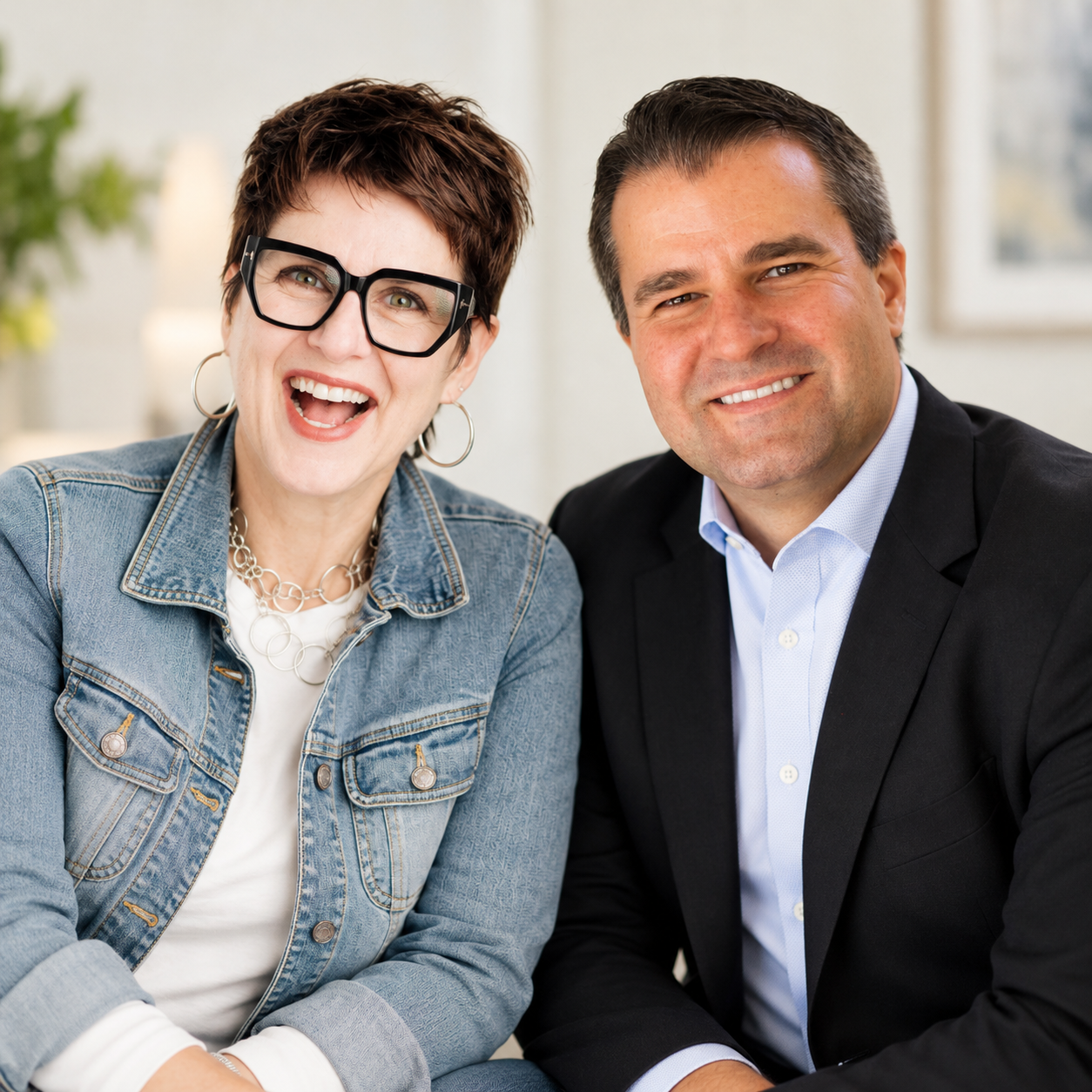
Two perspectives. One shared question.
Patrick Bartosch and Sabine Hutchison approach the subject of belief from different but complementary directions. Patrick brings experience in healthcare communications, strategy, and decision-making, while Sabine brings an organizational, entrepreneurial, and human behavior perspective.
Together, they examine not only why other people believe questionable things, but why all of us can become attached to explanations that feel coherent, familiar, or personally important.
About Patrick

Patrick Bartosch, Co-host
Patrick Bartosch is a healthcare communications and strategy consultant who advises organizations and leaders on positioning, reputation, scientific communication, and complex decisions. He holds a Ph.D. in health sciences from the University of Otago and an MBA from the University of Cambridge.
His work has given him a close view of how evidence, institutional narratives, professional identity, and human judgment intersect. He is particularly interested in the difference between the information available to decision-makers and the information they are psychologically or organizationally prepared to accept.
Patrick brings a healthcare, business strategy, and decision-making perspective to Truth and the Brain. He also brings the experience of once answering only five out of ten common-knowledge questions correctly while remaining impressively confident in most of his answers.
About Sabine

Sabine Hutchison, Co-host
Sabine Hutchison is an entrepreneur, author, speaker, and co-founder of Seuss+, a consultancy working in the life sciences sector. She is also the founder of The Ripple Network and the author of Beyond the Ladder, a book about career growth, clarity, and redefining success beyond traditional paths.
Across her work, Sabine is interested in the gap between what people know and what they actually do. She works with leaders, teams, and individuals as they navigate change, make decisions, challenge old assumptions, and find more honest ways to communicate.
Sabine brings an entrepreneurial and organizational lens to Truth and the Brain, with a particular interest in the stories people and institutions build about themselves, and what happens when those stories no longer match the evidence in front of them.